
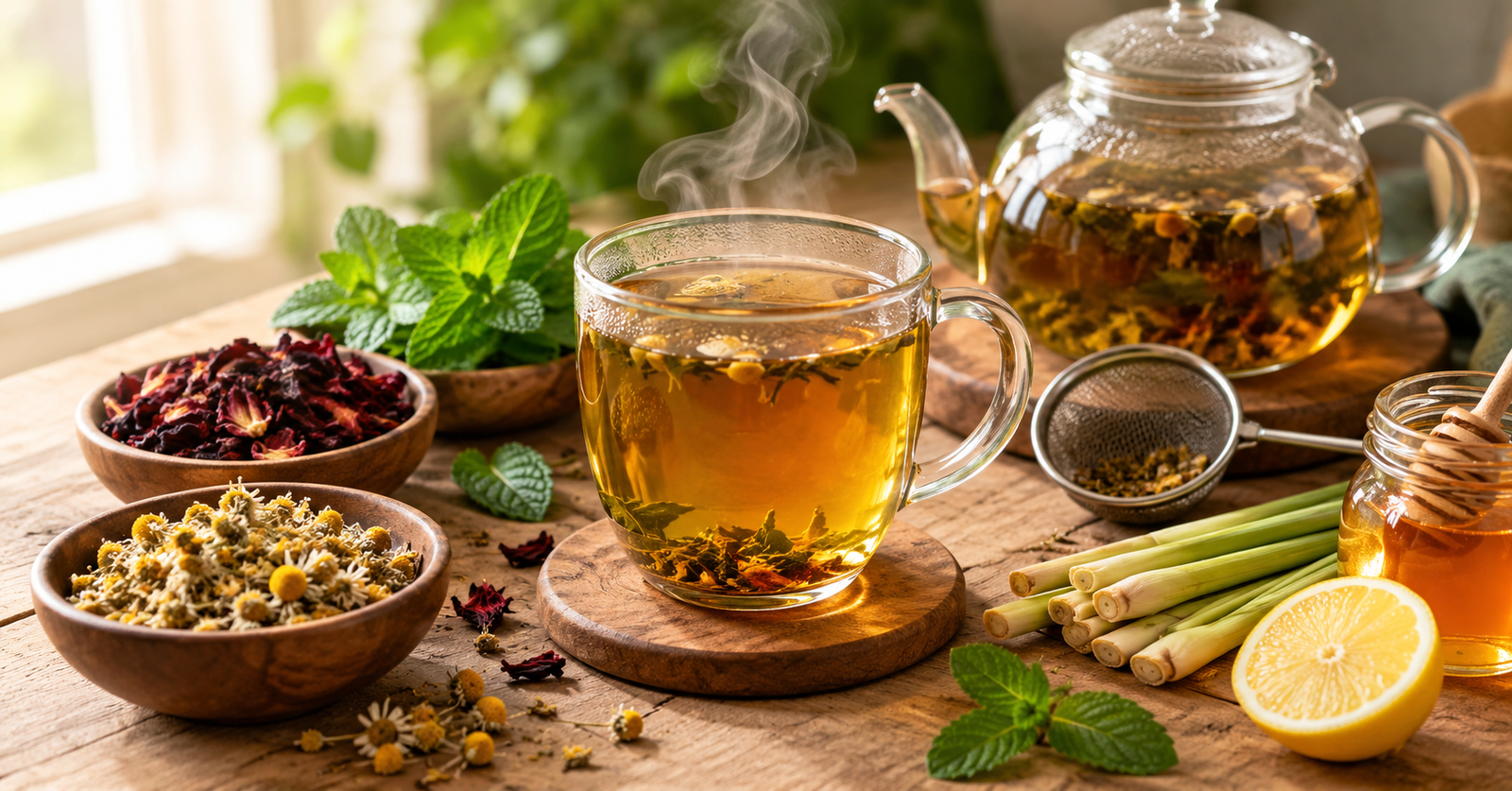
Learning how to make herbal tea takes about five minutes, and you probably own most of what you need already. Herbal tea, also called a tisane, comes from flowers, leaves, roots, seeds, or fruit. It does not come from the Camellia sinensis plant that gives us green tea and black tea. That is why a cup of chamomile or spearmint contains no caffeine and feels as right at nine at night as it does at nine in the morning.
Most guides hand you one ratio and stop there. This one walks through the full method, from measuring and steeping to iced tea, blends, and quick fixes for a cup that tastes weak or bitter. You can follow it with herbs from your garden, a jar from your pantry, or a pouch of loose leaf tea.
You do not need special equipment. A few simple tools cover everything.
Water deserves a moment of attention. It makes up almost the entire cup, so its taste shows up in every sip. Start with fresh cold water each time. Water that has been boiled and cooled tastes flat, and your herbs cannot make up for it.
This method works for almost any herb. Adjust the amounts once you know how strong you like your cup.
Do not throw the herbs away right after the first cup. A second steep gives a milder drink that still tastes good, especially with whole leaves and flowers.
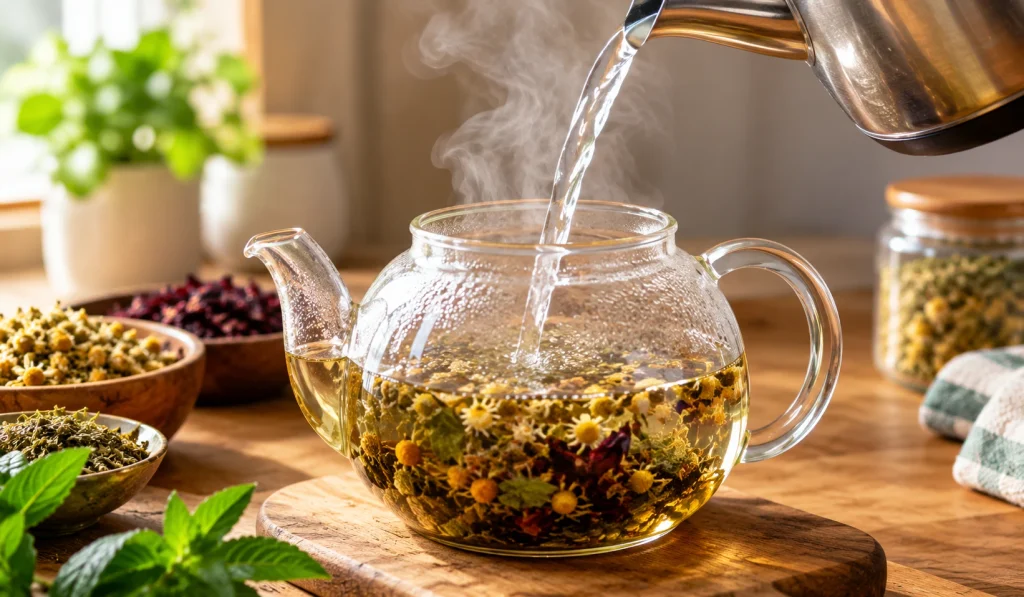
Both work, and each has a place in your kitchen.
Fresh herbs give a bright, green taste. Use a small handful of sprigs, press them lightly to release the oils, and steep for about 5 minutes. Mint, lemon balm, and lemongrass shine this way.
Dried herbs have a more concentrated flavor, so you use less. They also keep for months, which lets you blend plants from different seasons into one jar.
If you grow your own, harvest in the middle of the morning after the dew has dried. Pick leafy herbs just before the plant starts to bud, when the flavor runs strongest. Spread the herbs one layer deep on a clean towel or screen, keep them out of direct sun, and give them about 10 days to dry. A food dehydrator works faster. Crush large leaves gently by hand, but skip the grinder. Powdering dried herbs can make the tea bitter.
Store dried herbs in an airtight jar away from light and moisture. Most keep their flavor for six months to a year. Only brew plants you can identify with full confidence as safe to eat.
A blend lets you build a flavor that no store shelf offers. A simple formula keeps you from guessing.
Choose a base herb that carries the main flavor. Add a supporting herb that complements it, then finish with a small accent that adds a pop of taste. Start with 3 parts base, 1 to 2 parts supporting, and a quarter to 1 part accent. Treat these numbers as a starting point, since herbs often change roles from one blend to the next.
Here are three blends to try:
Calm evening blend. Mix 3 parts chamomile, 1 part lemon balm, and a quarter part dried lavender. Soft, floral, and gentle.
After dinner blend. Mix 3 parts spearmint, 1 part ginger, and a quarter part fennel seed. Cool, warm, and lightly sweet at once.
Bright afternoon blend. Mix 3 parts hibiscus, 1 part dried lemon peel, and 1 part rose hips. Tart, fruity, and a deep ruby red.
Brew a single cup before you mix a big jar. If you like it, scale up the amounts and let the jar rest for a week or two so the flavors settle together. Strong herbs such as lavender, fennel, and star anise go a long way, so measure them with a light hand.
Herbal tea tastes wonderful cold, and you have three easy ways to get there.
Flash chill method. Brew a stronger cup using 2 to 3 teaspoons of herbs for every cup of hot water. Steep it, strain it, and pour it over a glass full of ice. The extra herbs make up for the ice that melts.
Slow chill method. Brew with about 1.5 teaspoons per cup, strain, and let the tea cool in the fridge. You skip the dilution, and the flavor stays bold.
Cold brew method. Add 1 tablespoon of herbs to every 12 ounces of cold or room temperature water. Cover it and leave it in the fridge for 4 to 10 hours, or overnight. Cold brewing pulls out the softer notes of each herb and gives a smoother, rounder drink.
Mint, hibiscus, and lemongrass hold their flavor well on ice. Finish the glass with lemon slices, fresh mint, or a few berries. Keep the pitcher in the fridge and drink it within two days.
If your cup falls short, one of these fixes usually solves it.
The tea tastes weak. Add more herbs before you add more time. Cover the cup, and make sure every piece is wet. Some herbs need a longer steep, especially roots and seeds.
The tea tastes bitter. Shorten the steep or use fewer herbs. Strong plants such as dandelion root, lavender, and dried citrus pith can turn harsh if you leave them too long.
The tea tastes flat. Switch to fresh cold water and check how old your herbs are. Herbs that sat in a warm, bright cupboard lose their flavor fast.
The tea tastes sharp. Balance it with something naturally sweet. Fennel, licorice root, cinnamon, and star anise add sweetness without sugar. A small spoon of honey works too.
The tea tastes plain. Add a strip of lemon or orange peel, a slice of fresh ginger, a cinnamon stick, or a few mint leaves. Citrus peel, rose hips, and hibiscus all bring brightness to a dull cup.
People often search for tea health benefits, so a clear note helps here. Herbal teas are food and drink. They are not medicine, and they do not replace care from your doctor. Research on individual herbs varies, and much of what we know comes from traditional use. With that in mind, here is how people commonly enjoy popular herbs.
Chamomile. A soft, apple scented flower that many people sip in the evening to wind down.
Spearmint and peppermint. Fresh and cooling, and a popular choice after a meal.
Lemon balm. A gentle citrus scented leaf from the mint family, often used in calming blends.
Ginger. A warming root that people have used for generations to settle the stomach.
Hibiscus. A tart, ruby red flower with a flavor close to cranberry. It makes a striking iced tea.
Tulsi. Also called holy basil, a leaf that many households in India brew as a daily ritual.
Lemongrass. A light, citrusy stalk that tastes clean on its own and pairs well with ginger.
Rose hips. The fruit of the rose plant, tangy and rich in vitamin C.
Some herbs call for extra care. Raspberry leaf tea, for example, is usually advised only in the later stages of pregnancy. St John’s Wort can interact with several medications. If you are pregnant, nursing, taking prescription medicine, or living with a chronic health condition, check with your doctor or a qualified medical herbalist before you add a new herbal tea to your routine.
Strictly speaking, no. True tea, including green tea, black tea, white tea, and oolong, comes from the leaves of the Camellia sinensis plant and contains caffeine. Herbal tea comes from other plants, so it is naturally caffeine free. A few exceptions exist, such as yerba mate, which carries its own caffeine. For most herbs, though, you can drink a cup late in the day and still sleep well.
If you would rather skip the foraging and drying, Peakora Tea offers a range of organic herbal teas grown in the hills of Ilam and Dhankuta in eastern Nepal. The collection includes lemongrass, tulsi, hibiscus, spearmint, chamomile, and Blue (Butterfly) tea. Each one is handpicked, certified organic by USDA and EU standards, and packed within 48 hours so it arrives fresh.
Every method in this guide works with these teas. Brew the chamomile for a quiet evening, shake the spearmint over ice in summer, or blend lemongrass with a slice of ginger for a bright afternoon cup. Because the herbs are whole and not dust, you can often steep them a second time.
How long should I steep herbal tea?
Steep leaves and flowers for about 5 minutes and roots, seeds, or bark for 10 to 15 minutes. Taste as you go, since your own preference matters most.
Can I reuse herbs for a second cup?
Yes. The second cup tastes lighter, but whole leaves and flowers still give plenty of flavor. Add a pinch of fresh herbs if you want more strength.
Can I drink herbal tea every day?
Most healthy adults enjoy a few cups a day. Herbs differ in strength, so read about each one you use, and talk to your doctor first if you have a health condition or take medication.
What is the best way to store herbal tea?
Keep it in an airtight container away from light, heat, and moisture. Dried herbs and blends stay at their best for six months to a year.
Knowing how to make herbal tea comes down to four things: fresh water, enough herbs, a cover on the cup, and a little patience. Pick one herb, brew one covered cup, and notice what you would change. Then adjust the amount, the steep time, or the herb until the cup tastes right to you. Once that feels easy, move on to blends and iced tea. Your own favorite will show up faster than you expect.