Free Delivery in USA and Nepal on orders over $50
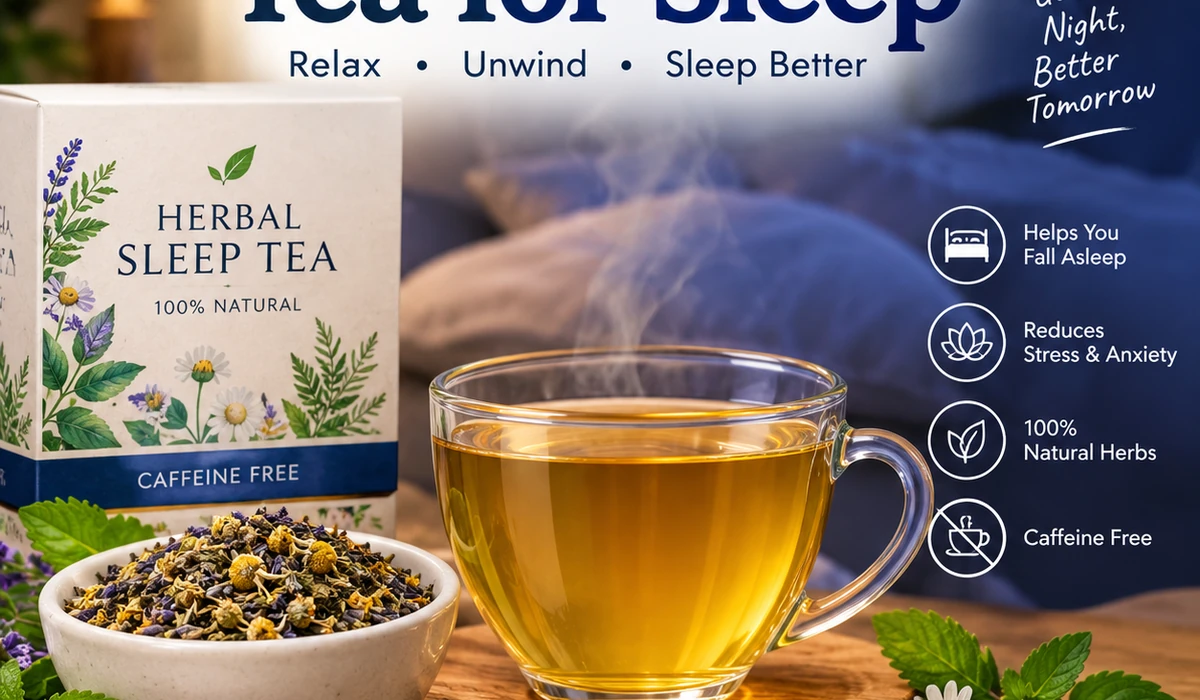
A cup of caffeine free tea for sleep will not knock you out. It can give you a warm, caffeine-free wind-down ritual, and a few herbs have some research behind them. This guide covers seven options, what studies actually found, and who should skip each one.
Health note: This article is for general information. It does not diagnose, treat, or cure any sleep disorder. Talk to a doctor or pharmacist before using herbal products, especially if you are pregnant, breastfeeding, have a heart condition, or take medicine.
Caffeine lingers longer than most people expect. In a small study of 12 healthy sleepers, 400 mg of caffeine taken six hours before bed cut total sleep time by more than an hour. Participants did not notice the loss. The authors suggested avoiding caffeine after 5 p.m. (American Academy of Sleep Medicine summary of Drake et al., 2013).
Two caveats apply. The study used caffeine pills, not tea. It was also small. But it explains why an evening cup of black tea can backfire.
The CDC recommends that adults get at least seven hours of sleep per night (CDC FastStats). A caffeine-free drink is one easy way to protect those hours.
These two are not the same.
A lab study of 20 commercial teas found 14 to 61 mg of caffeine per serving in white, green, and black teas. Decaffeinated teas had under 12 mg. Caffeine was not detected in the herbal teas tested (Journal of Analytical Toxicology, 2008).
If you are sensitive to caffeine, choose a caffeine free herbal tea for sleep. Read the ingredient list too. Some blends may add green tea, yerba mate, or guarana, so “herbal” on the front of the box is not a guarantee.
| Tea | What research suggests | Main caution |
|---|---|---|
| Chamomile | Small improvement in sleep quality in some trials | Daisy-family allergy; blood thinners |
| Lemon balm | Helps anxiety scores; thinner sleep data | Low-quality studies; ask about sedatives |
| Lavender | Mostly inhaled oil or extracts | Not studied much as tea |
| Passionflower | Small studies; mixed results | Avoid in pregnancy; drowsiness |
| Valerian | Inconsistent | Not advised for chronic insomnia; liver disease |
| Peppermint | No sleep trials found | May worsen reflux |
| Rooibos | No sleep trials found | No major caution found |
Chamomile is the best-known caffeine free tea for sleep.
What the research says:
Be careful if:
Lemon balm is a mint-family herb with a mild lemon scent.
What the research says: A 2021 meta-analysis of randomized trials found lower anxiety and depression scores than placebo. The authors noted high variation between studies and called for better trials (Ghazizadeh et al., Phytotherapy Research). A narrative review says lemon balm shows promise for sleep quality but needs more robust trials (review in PMC).
Be careful if: You take sedating medicine. I did not find a clear safety statement on long-term use, so ask your pharmacist.
Dried lavender buds make a fragrant, caffeine-free tea.
What the research says: Most lavender sleep studies test inhaled essential oil or oral extracts, not tea. A 2022 review found promising results but called for longer, better-designed trials (Luo and Jiang, Phytotherapy Research). An earlier review of aroma inhalation found a small to moderate benefit (Fismer and Pilkington, 2012). I did not find strong trials on lavender tea itself.
Be careful if: You are tempted to add essential oil to your cup. Essential oils are not tea ingredients. Use dried lavender sold for tea.
What the research says: NCCIH reports that a small amount of research suggests oral passionflower might improve total sleep time in adults with insomnia. Effects on falling asleep and staying asleep are mixed (NCCIH).
Be careful if:
What the research says: NCCIH says evidence on valerian for sleep problems is inconsistent. The American Academy of Sleep Medicine’s 2017 guideline recommended against valerian for chronic insomnia in adults (NCCIH).
Be careful if: You have liver disease. Mayo Clinic advises avoiding valerian in that case. It may also increase the effects of other sleep aids (Mayo Clinic). The safety of long-term use is unknown.
Peppermint tastes clean and is naturally caffeine-free. I did not find clinical trials showing it helps sleep.
Be careful if: You get heartburn. Peppermint can relax the muscle that keeps stomach acid down, which may worsen reflux in some people (Acibadem International). Spearmint or a non-mint tea may suit you better at night.
Rooibos is a naturally caffeine-free herbal tea with a mild, slightly sweet taste. I did not find sleep trials for it. Choose it for flavor and as a caffeine-free ritual, not as a sleep treatment.
Many brands sell a sweet dreams herbal tea caffeine-free chamomile lavender blend for sleep. The idea is simple: combine two calming, familiar flavors in one cup. Keep these points in mind:
There is no official dose of herbal tea for sleep. I did not find one from NCCIH or the CDC. These are practical habits, not medical instructions:
Natural does not mean risk-free. Herbal products do not go through the same approval process as medicines, and NIH notes that chamomile and valerian have not been shown conclusively to treat sleep disorders (NICHD).
Talk to a doctor or pharmacist before use if you:
Children: Do not give herbal sleep teas to babies or young children without a pediatrician’s advice. Safety has not been established for most of these herbs in young children.
Harvard Health lists the basics: a consistent sleep schedule, a cool and comfortable bedroom, and daytime habits that support sleep (Harvard Health). Tea works best as part of that routine.
Try pairing your cup with a fixed bedtime, dim lights, and no screens. Your brain may start to link the cup with winding down. That link is a ritual effect, not a drug effect.
See a clinician if poor sleep continues for weeks, or if you snore loudly, gasp at night, or feel very sleepy in the daytime. Mayo Clinic notes that persistent insomnia can point to a sleep habit problem or a medical or psychological condition. It suggests considering an evaluation at an accredited sleep center (Mayo Clinic).
Yes. Chamomile is an herb, not a true tea, so it does not come from the Camellia sinensis plant. Check the label on blends.
No tea is proven best. Chamomile has the clearest (but modest) evidence of the seven above. Pick the one you tolerate and enjoy.
No. Decaf tea still has a small amount of caffeine, under 12 mg per serving in one lab study. Caffeine free teas for sleep, such as herbal infusions, had none detected.
For most healthy adults, a cup of an ordinary herbal tea is a low-risk habit. But long-term safety is not established for every herb. NCCIH says tea may be safe for up to seven nights for passionflower, and valerian’s long-term safety is unknown. Ask your doctor about nightly use.
I found no trials on specific commercial blends. The individual herbs have modest, mixed evidence. A blend is best seen as a pleasant bedtime ritual.